
Last Seen: Cold Case Mystery
Hohama StudioEntertainment
4.470.00 Reviews
- Version
- 1.11.0
- Installs
- 50.00K
- Age Rating
- Teen
Screenshots

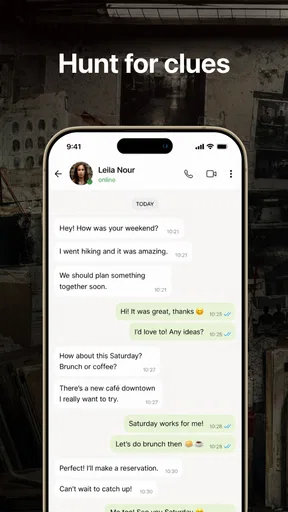
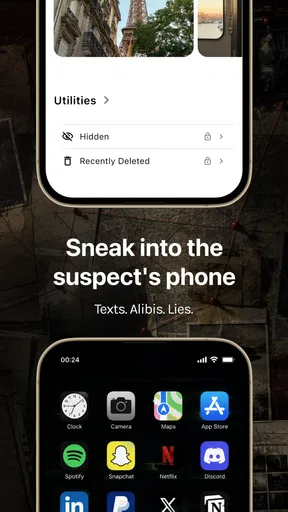
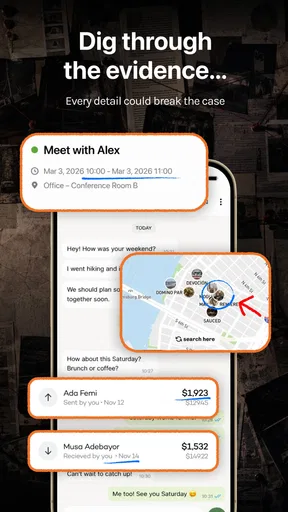
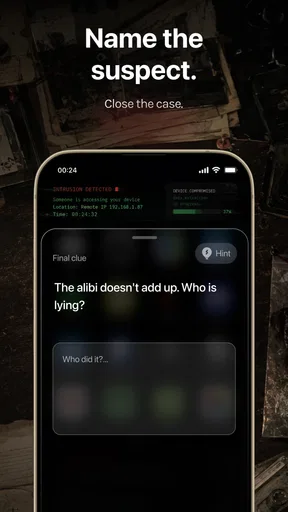

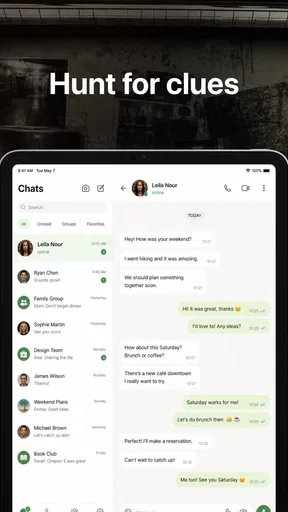
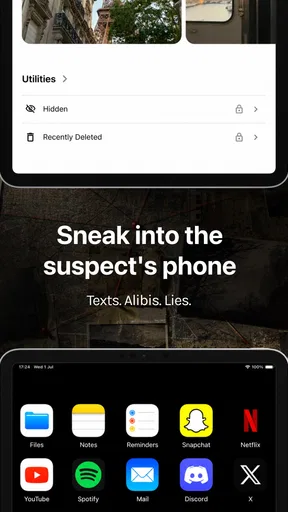
Our Review of Last Seen: Cold Case Mystery
 Analysis by Appyee
I approached Last Seen: Cold Case Mystery expecting a short entertainment app built around investigation, but its appeal is more specific than that. It places me in the role of a detective examining a victim’s phone, looking for useful traces and connecting clues until the case begins to make sense. The experience is less about fast reactions and more about paying attention to what is on the screen, remembering details, and deciding which pieces deserve another look.
That makes it a good fit for someone who enjoys crime stories but wants to participate rather than simply watch. I found the phone-centered format more personal than a standard dialogue-driven mystery because the evidence feels tied to an individual life. Messages, images, and other details are not just background decoration; they are the material I use to form a theory. The result is an entertainment app that asks for concentration without demanding the reflexes of an action game.
What the first session feels like
The app is published by Hohama Studio and sits in the entertainment category. It is free to install, with optional in-app purchases ranging from $1.99 to $39.99 per item. That combination makes it easy to try before deciding whether the format suits you, although I would still approach the purchase options carefully rather than assuming every part of the experience is included without extra cost.
The content rating is Teen, which is a useful signal for families deciding whether it belongs on a shared device. A crime investigation naturally brings heavier themes than a casual puzzle, so I would not treat the age label as a minor detail. I would also choose a quiet moment for the first session. The central pleasure comes from noticing relationships between clues, and that is much harder when I am opening and closing the app between other tasks.
The store presents it as a detective experience focused on searching a victim’s phone, following leads, and cracking the case. In practice, the important shift is from passive reading to active inspection. I am not merely waiting for a character to explain what happened. I have to decide what information matters, which detail might connect two events, and when a seemingly ordinary piece of phone content deserves more attention.
That structure separates it from the usual alternatives in the entertainment category. A crime television episode gives me a finished chain of evidence, while a conventional puzzle game often reduces progress to matching shapes or solving isolated riddles. This app sits between those approaches: it gives me a narrative reason to investigate, but it makes the act of searching part of the entertainment itself.
Who will enjoy the format
I would recommend it first to players who like slow-burn mysteries, digital evidence, and stories where small observations can change the direction of an investigation. It is especially suitable for a person who enjoys discussing theories with a friend after a session. The phone format creates natural conversation points: one person can notice a suspicious detail while the other remembers an earlier clue that changes its meaning.
It is less suitable for anyone looking for constant action, a large explorable world, or a game that can be played with sound off and attention divided. The investigation depends on reading and interpretation, so someone who wants instant rewards may find the pace restrained. I also would not choose it as a background activity while commuting if I expected interruptions; losing the thread of a case can make the next return feel less clear than it should.
Getting started without losing the thread
The first useful habit is simple: treat the phone as an evidence board rather than tapping through it as quickly as possible. I found it helpful to pause whenever a new item appeared and ask what role it might play. Is it identifying a person, establishing a time, revealing a relationship, or creating a contradiction? That question turns browsing into investigation and reduces the chance of overlooking a detail that later becomes important.
I also recommend keeping a small mental or written timeline. This is one of the most practical ways to approach a phone-based mystery because individual entries can feel harmless when viewed alone. When I arrange them by sequence, changes in behavior and gaps in communication become easier to notice. The timeline does not need to be elaborate; a few names, events, and possible connections are enough to prevent the case from becoming a collection of disconnected screens.
Another useful approach is to separate facts from assumptions. If a message suggests that two people know each other, I treat that as a clue rather than proof of motive. If an image seems suspicious, I ask what it actually establishes before building a theory around it. This discipline makes the eventual reveal more satisfying and protects me from following the most dramatic explanation simply because it appeared first.
For a first-time user, the path to a meaningful success is therefore quite concrete: open the case, inspect the available phone material carefully, identify at least one relationship between separate clues, and return to earlier information whenever a later discovery changes its context. The first real breakthrough is not just finding an item. It is recognizing why that item matters alongside something encountered earlier.
A realistic everyday session
Imagine having a spare half hour after dinner. I would begin by checking the phone content without trying to solve everything immediately. I would note the people who appear most often, then look for repeated references or details that place events in an order. If a new clue seems to conflict with my first impression, I would resist restarting from scratch and instead mark that conflict as the next thing to investigate.
That workflow works better than random tapping because it gives each return to the app a purpose. One session can focus on identifying the important people, another on checking the sequence of events, and a later one on testing the theory against the evidence. The app becomes more enjoyable when I use those small goals instead of expecting a complete solution in one uninterrupted sitting.
There is also a social use case here. I can show a friend a clue and ask what they think it means, then compare interpretations without giving away every discovery. Because the evidence is presented through a phone rather than a traditional level map, it is easy to talk through the case in everyday language. That makes it a pleasant choice for two mystery fans who want a shared discussion but are not necessarily playing at the same time.
Where new users may become confused
The biggest potential confusion is mistaking every piece of phone content for an equally important clue. Mystery games often include ordinary-looking material to make the setting feel believable, and I found it more productive to look for connections than to assign significance to everything. Repeated names, unusual timing, and information that changes the meaning of an earlier discovery deserve more attention than isolated details that never connect to anything else.
A second point is that uncertainty is part of the design of this kind of investigation. If I do not understand a clue immediately, that does not necessarily mean I missed a button or made a wrong choice. Sometimes the better move is to continue examining the available material and let later context clarify the earlier item. I found that forcing a conclusion too early created more confusion than taking a short break and returning with a cleaner theory.
It is also worth remembering that a phone interface can encourage shallow reading. I may be tempted to skim because the content resembles familiar everyday communication, but the ordinary presentation is exactly why careful reading matters. I would slow down for names, wording, sequence, and anything that appears to contradict another entry. Those are the details most likely to turn a vague suspicion into a useful lead.
When progress feels unclear, I would avoid tapping randomly or purchasing something simply because I want to move faster. First, I would revisit the last information that changed my understanding of the case. Then I would compare it with the earlier clue it seems to affect. This is a better troubleshooting method because it keeps the investigation grounded in evidence rather than turning the experience into trial and error.
How the current release fits
I reviewed the app as version 1.11.0, and it requires Android 7.0 or later. That makes the compatibility question straightforward for many Android users, but it is still worth checking the operating system on an older phone before installing. The app is available for Android and iOS, so it can appeal to people who prefer different mobile platforms, although the exact feel will naturally depend on the device being used.
The app has an average rating of 4.4 from around 1.1 thousand ratings, with over 50 thousand installs. Those figures suggest that it has found an audience without making popularity the main reason to try it. My own recommendation is based more on the focused mystery format: if you enjoy examining digital clues, the concept has a clear identity; if you want a broad catalog of unrelated mini-games, it is probably too specialized.
The free entry point is helpful because the best way to judge this app is to experience its investigation rhythm. At the same time, the presence of optional purchases means I would pay attention to what is offered before confirming anything. The listed item range extends from $1.99 to $39.99, so the sensible approach is to treat purchases as a deliberate choice rather than part of the basic installation decision.
What I would do after the first breakthrough
Once I had connected my first meaningful set of clues, I would resist the urge to rush toward the ending. The strongest part of this format is usually the gradual change in interpretation: an apparently harmless detail may become more revealing after another discovery. I would keep checking whether my theory explains the evidence as a whole, not just the most dramatic item on the screen.
A useful next step is to challenge the favorite theory. If I think I know who is responsible or what happened, I would ask which clues support that idea and which ones do not fit. This is more rewarding than simply looking for confirmation, and it can expose an overlooked relationship. It also gives the investigation a fairer standard than choosing the first explanation that sounds convincing.
I would then return to any material that I initially dismissed. This is one of the less obvious strengths of the phone format: context can make old information feel new. A message that seemed like routine conversation may become relevant after a later discovery establishes a connection. Revisiting earlier content is not wasted time; it is part of how the case builds its sense of cause and effect.
For players who prefer a relaxed pace, the app works well as a short evening mystery rather than a marathon session. For players who become deeply invested, the same structure supports longer stretches of analysis, provided they are comfortable reading carefully. The trade-off is clear: the more attention I give the evidence, the more satisfying the deductions become, but the experience loses much of its appeal if I treat it like a game to rush through.
When another option may be better
I would choose a conventional narrative adventure instead if I wanted character movement, environmental exploration, or frequent interaction with a larger game world. I would choose a pure puzzle app if my priority were repeatable brainteasers without a crime narrative. I would choose a television mystery if I wanted to relax without making decisions about which evidence matters. This app earns its place by combining story and investigation, not by replacing all three alternatives.
It may also be the wrong choice for someone sensitive to crime themes or for a younger player who is not comfortable with Teen-rated entertainment. The subject matter is central to the experience, so there is no reason to force it into a family setting where the tone feels inappropriate. Likewise, users who dislike reading on a small screen may find the phone presentation tiring even if they enjoy detective stories in other formats.
For first-time users, my practical advice is to install it when you can give the opening case uninterrupted attention, keep a simple list of names and events, and judge clues by how they connect rather than how dramatic they appear. If the first meaningful discovery makes you curious about what came before, the app is doing exactly what it should. If you find yourself wishing for action, exploration, or instant puzzle feedback, that is a sign that a different kind of entertainment would suit you better.
Overall, I found Last Seen: Cold Case Mystery most convincing when I treated it as a focused investigation instead of a quick mobile diversion. Hohama Studio has built its identity around the intimate idea of searching through a victim’s phone, and that gives the app a stronger personality than a generic mystery wrapper. It is free to try, easy to understand at a basic level, and capable of rewarding patient attention.
My final recommendation is aimed at readers who want to work for their conclusions. Start slowly, separate evidence from guesses, revisit earlier material, and let the case develop rather than forcing an answer. With that mindset, the app offers a satisfying way to spend a quiet stretch of time. It is not the right pick for every entertainment session, but for a first-time detective who enjoys digital clues and careful deduction, it is a thoughtful and approachable place to begin.
Verdict
Strengths of Last Seen: Cold Case Mystery
- Atmospheric visuals create a convincing cold-case investigation mood.
- Evidence boards make it easy to connect clues and revisit discoveries.
- Short investigation sessions work well for casual mobile play.
- The mystery encourages careful observation rather than fast reflexes.
- Distinct locations help the case feel varied as the story progresses.
Limitations of Last Seen: Cold Case Mystery
- Some clues can be difficult to spot on smaller phone screens.
- Progress may slow when several leads require similar deductions.
- The darker visual style can make certain details blend into backgrounds.
- Replay value is limited once the central mystery has been solved.
- Players wanting action may find the investigation pace too restrained.
Similar Picks in This Category
View All
Google Play Games
Google LLC3.9

Netflix
Netflix, Inc.4.8

YouTube Kids
Google LLC4.2

Disney+
Disney4.4

Prime Video
Amazon Mobile LLC4.7

Steam
Valve Corporation3.2
Frequently Asked Questions
What is Last Seen: Cold Case Mystery about?
Last Seen: Cold Case Mystery is a narrative investigation game centered on the disappearance of a teenage girl. You examine messages, photos, social media activity, notes, and other digital clues to reconstruct what happened. Instead of relying on traditional point-and-click exploration, the game presents the case through a phone-like interface, making the investigation feel personal and closely connected to the victim’s online life.
How does the gameplay work in Last Seen: Cold Case Mystery?
The main gameplay involves searching through digital evidence, reading conversations, reviewing media files, and connecting details that may reveal new leads. Your progress depends on noticing contradictions and interpreting information carefully rather than simply tapping through every screen. The story unfolds gradually, so patience is important, especially when clues appear unrelated at first or when a conversation contains subtle hints.
Is Last Seen: Cold Case Mystery free to download and play?
The game can generally be downloaded without an initial purchase, but availability of free content, advertising, and optional in-app purchases may depend on the platform and current version. Some story sections or convenience features may require payment. Before downloading, check the official Google Play or App Store listing for the latest pricing, supported devices, and purchase details, since these can change with updates.
Does the game require an internet connection?
An internet connection may be needed for downloading the game, receiving updates, loading certain story content, displaying advertisements, or processing optional purchases. Some previously downloaded sections may work offline, but offline availability can vary by device and version. For the smoothest experience, it is best to begin the investigation while connected to Wi-Fi and keep the application updated.
Is Last Seen: Cold Case Mystery suitable for children?
The game is aimed more at teenagers and adults because its mystery involves disappearance, danger, emotional tension, and potentially unsettling themes. Although it does not focus on graphic action, the subject matter can still be intense for younger players. Parents should review the store age rating, privacy information, and any interactive or advertising features before allowing a child to install it.
